
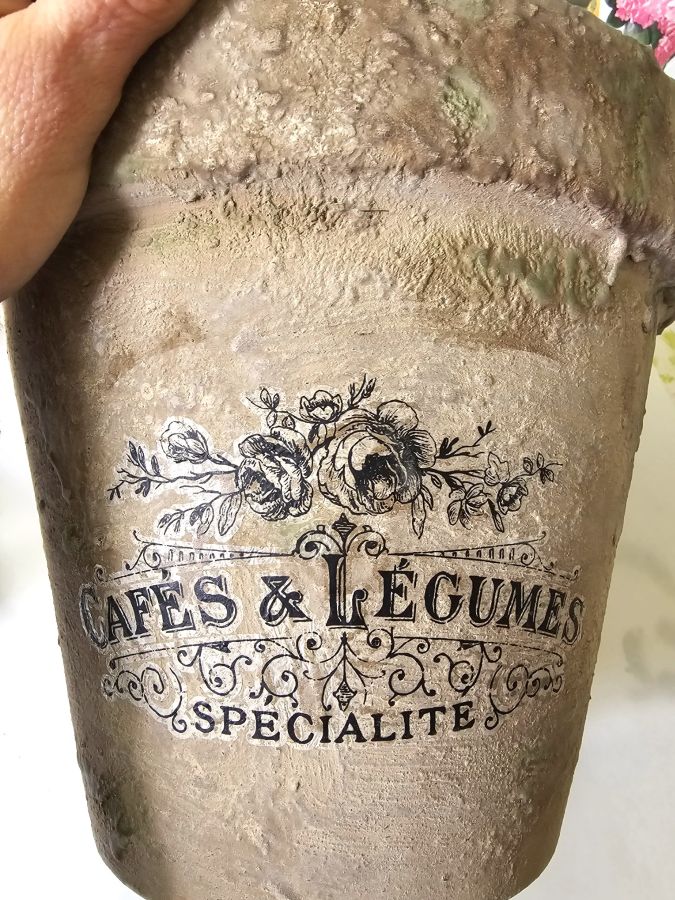
Easily Age Terracotta Pots Using Lime
Here at Cloches & Lavender, I love making new pieces that have an old look. Whether it’s DIY projects with a paint brush for furniture, aging books, or decorative elements. I’m always drawn to the perfectly imperfect finish. So, of course, a new pot needs the same desired look, right? Today, I’m sharing one of my favorite DIY projects and showing you how to easily age terracotta pots using lime. These have a timeworn finish, I love.
Jump to Printable DIY CardThis technique is the easiest way I’ve found to transform new terra xiotta pots with dramatic results, with charming, natural-looking patinas. Follow along with these step-by-step instructions, or jump to the printable DIY card.
As an Amazon Associate and through other affiliate links, I earn a small commission from qualifying purchases made through affiliate links. The price is the same whether you use the affiliate links or the website. All opinions are my own. (Check our full disclosure and privacy policy.)
Table of Contents
- 1 Easily Age Terracotta Pots Using Lime: Supplies List:
- 1.1 Step 1: Age New Terracotta Pots: Easy Lime Wash Technique
- 1.2 Step 2: Simple Steps to Apply Your Aged Pot Finish
- 1.3 Step 3: Clay Pots Add a Clear Coat and Sand
- 1.4 Step 4: Adding Moss Growth Look
- 1.5 Step 5: DIY Chalky Lime Pots with Rub on Transfers
- 1.6 Other Easy Ways to Age New Terra Cotta Pots
- 1.7 Supplies List Fertilizer Method:
- 1.8 Supplies List: Create Salt Water Aged Terracotta Pots
- 1.9 Salt Water Method:
- 1.10 Supplies List: Aged Pots with Plain Yogurt
- 1.11 Yogurt Method:
- 1.12 Staging Aged Terracotta Pots
- 1.13 Aging Clay Pots with Different Looks
- 1.14 Create Topiaries with Moss Paint and Faux Dirt
- 1.15 Why Lime is My Go-To for Aging Clay Pots
- 1.16 What is the primary ingredient for a subtler look and most natural-looking patinas?
- 1.17 Adding Terracotta Pots to Home Decorating
- 1.18 DIY Projects of Interest
- 2 Easily Age Terracotta Pots Using Lime
- 3 Easily Age Terracotta Pots Using Lime
Easily Age Terracotta Pots Using Lime: Supplies List:
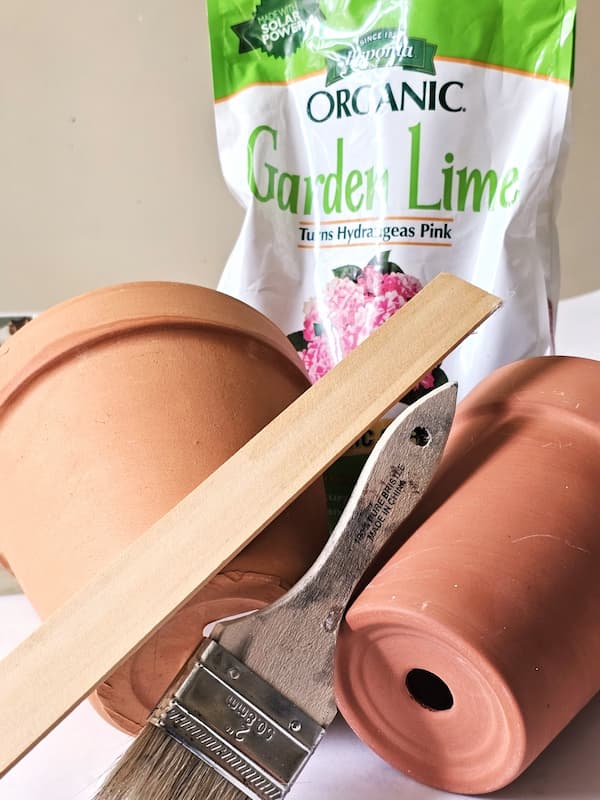
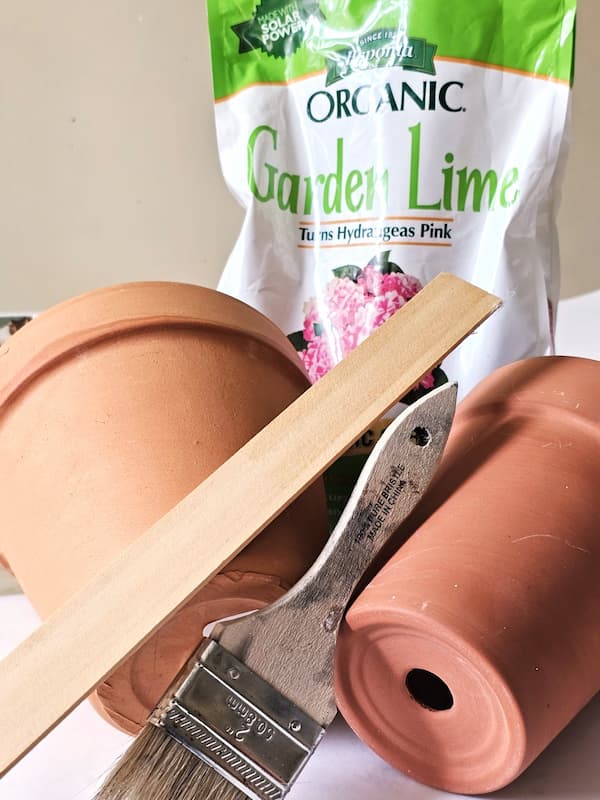
- Cup of garden lime – garden center, Home Depot, Amazon, or Walmart
- New terra cotta pots – Home Depot, garden center, or Dollar Tree
- Cheap brush, sea sponge, or sponge brush – Home Depot, Dollar Tree, or craft store (HERE)
- Plastic container
- 120-grit sanding sponge or sand paper
- Little water
- Avocado or moss craft paint or moss growth
- Matte Sealer
Join me as we try the fun and easy process of using lime to give clay pots an aged appearance.
Step 1: Age New Terracotta Pots: Easy Lime Wash Technique
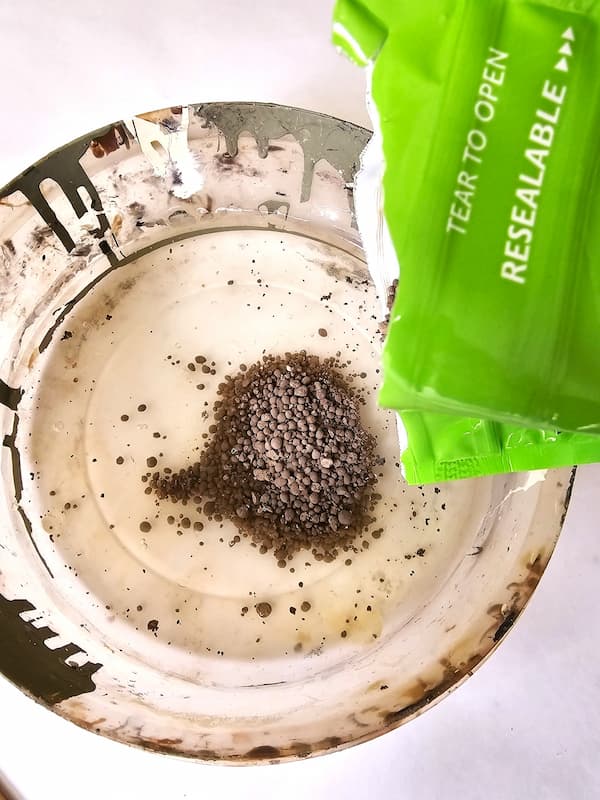
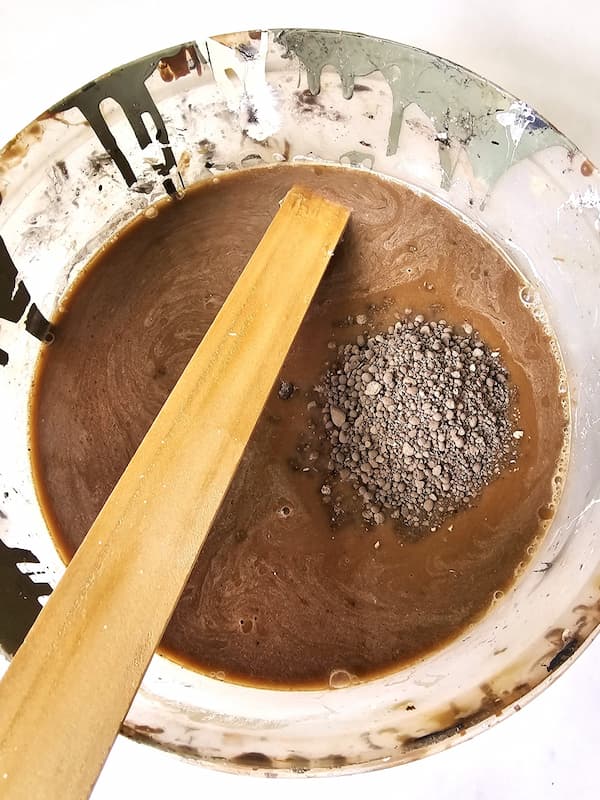
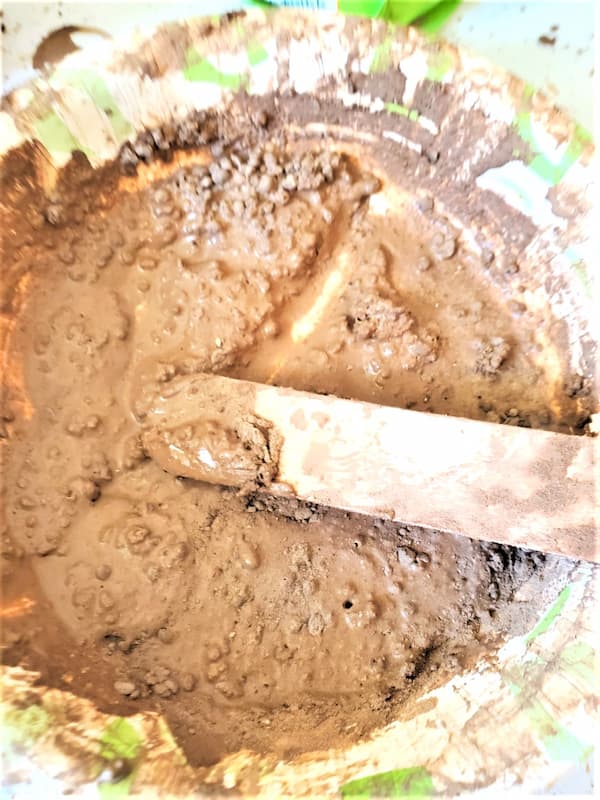
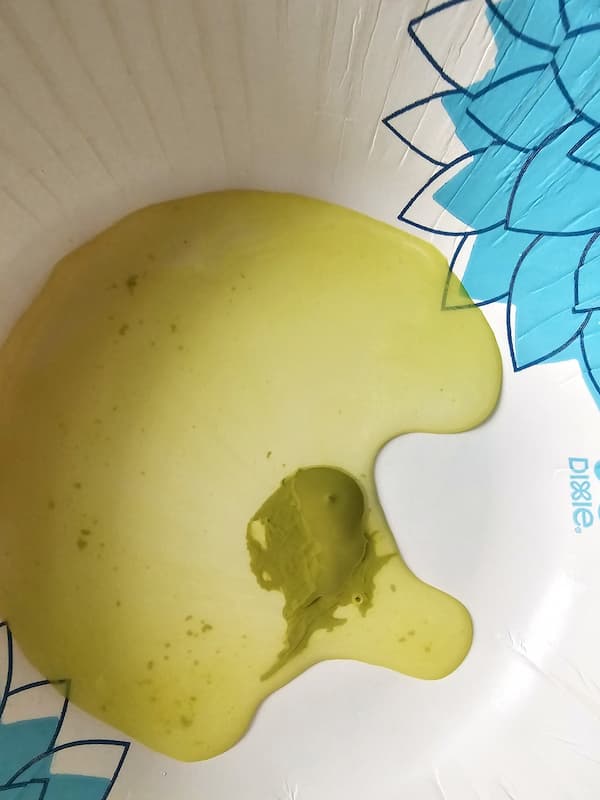
The first thing I did was cover your work surface with craft paper to begin the aging process. If it’s a nice day, you can even make your garden-lime-aged pots outdoors. The next step is to add chalky lime to a plastic bowl and add a little water. The mixture should have the consistency of pudding, which helps createthe look of naturally aged terra cotta pots.
I used a cup of garden lime and added a little water at a time until I reached the right consistency for my flower pots. Normally, the measurement is 2 cups of water to 1 cup of garden lime. For the lime technique, I’m working on four small pots and a few even smaller pots to create aged terracotta pots with a natural look.
Cindy’s Tip: I have the butcher paper roller attached to my craft tables and swear by it. This paper works with it, and the best part is that it’s waterproof!
Step 2: Simple Steps to Apply Your Aged Pot Finish
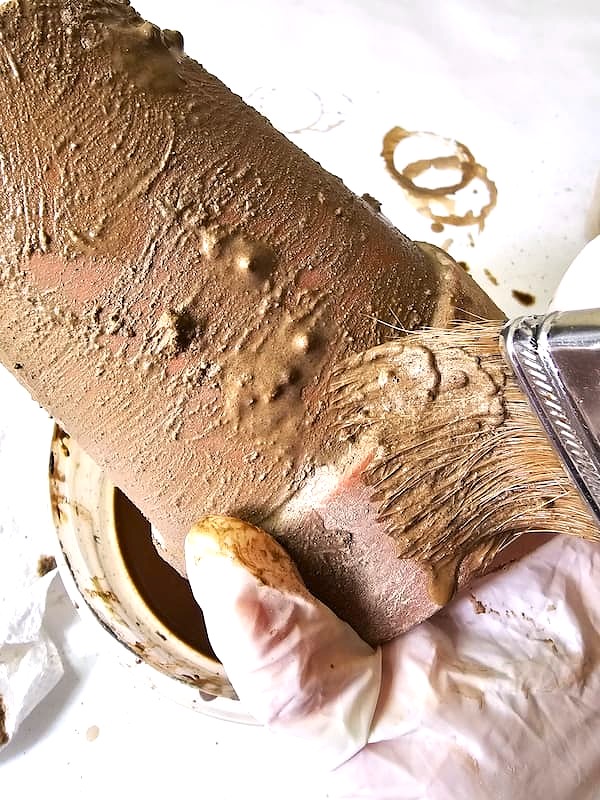
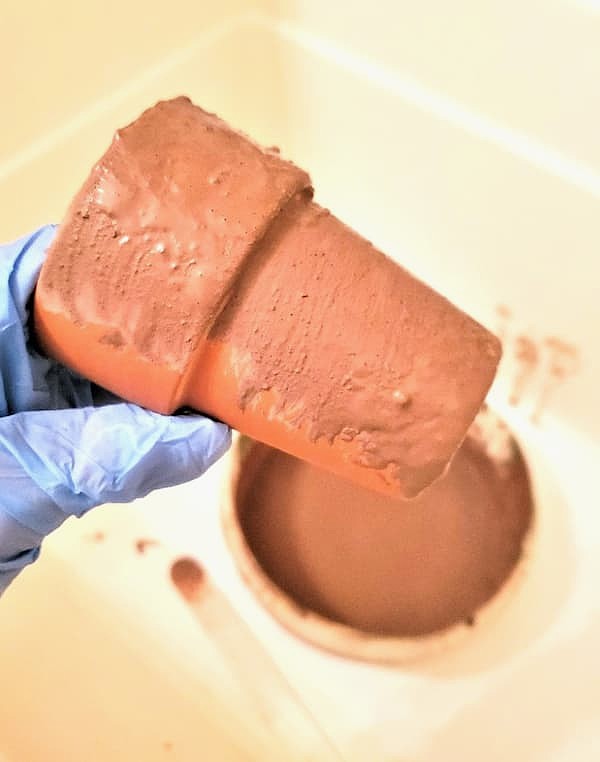
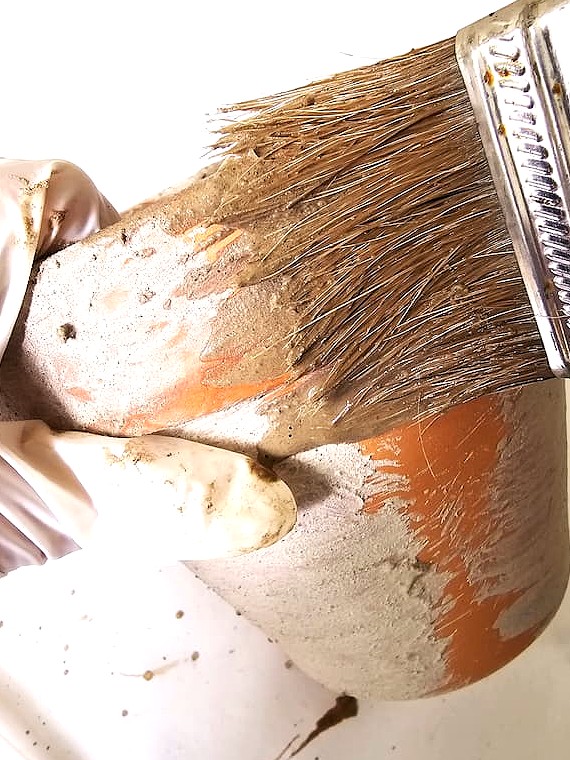
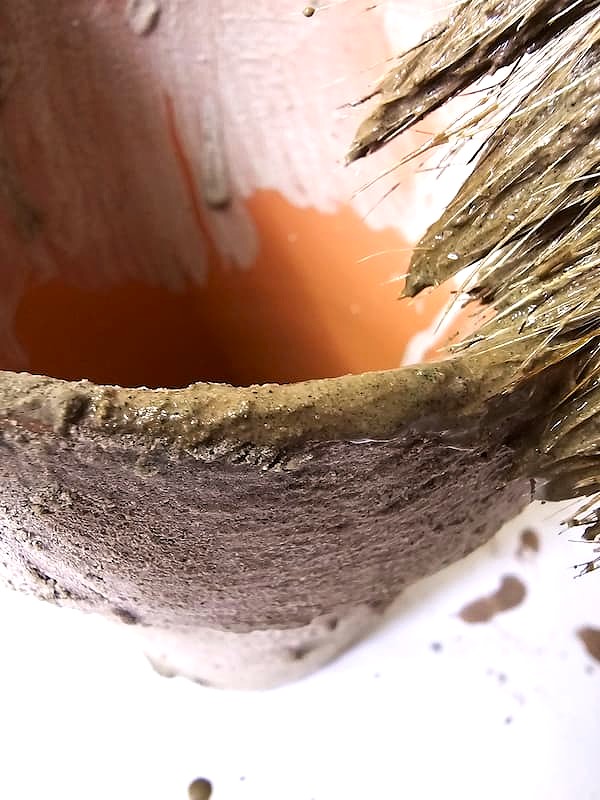
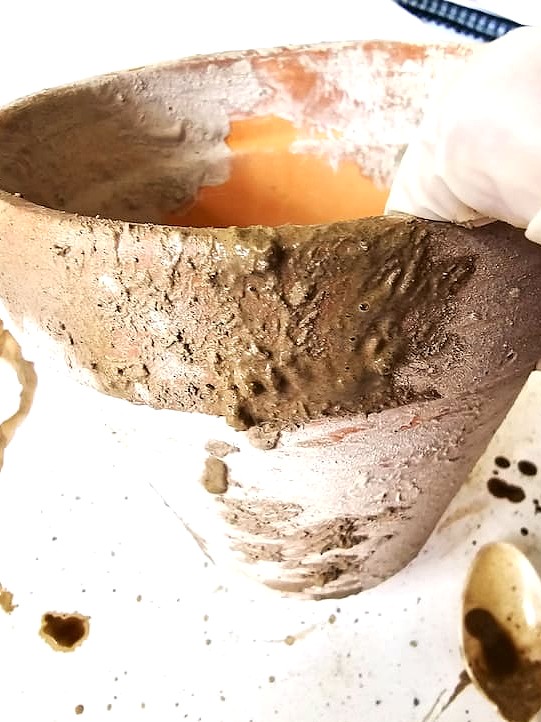
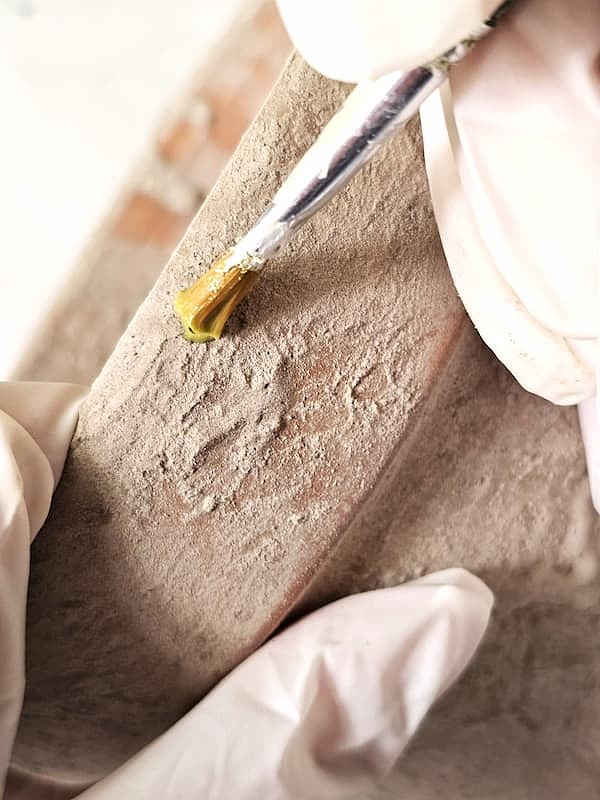
Begin applying the lime wash to the outside of the pot using a paint brush. To age new terracotta pots with lime, brush the mixture of garden lime over the outside of the flower pots. Once the outside dries, add the lime wash to the inside of the pot as well.
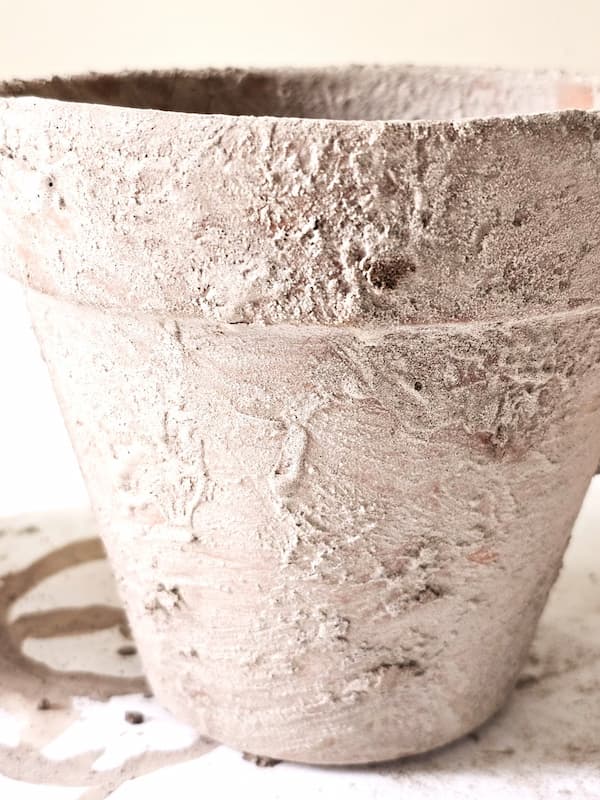
Let the pots dry. The pots will dry in a matter of minutes, and lime will form a white, soft film on the surface of the pot. This is what gives terra cotta pots a beautiful aged look and instant gratification, no waiting for pots to age naturally.
Cindy’s Tip: Lime can be caustic, so it’s important to wear gloves when working with it. I also like leaving spots heavier with the lime. When pots age naturally outdoors, they develop uneven areas. This helps the aged terracotta pots look more authentic.
Step 3: Clay Pots Add a Clear Coat and Sand
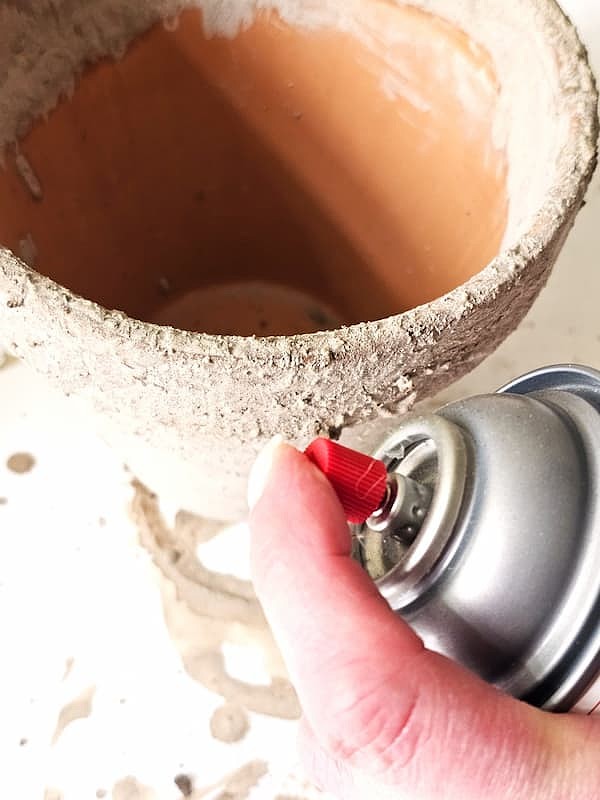
After the flower pots dry, spray them with a light coat of matte sealer. Being an organic product, lime may come off the pots; this is normal. Again, let the terra cotta pots dry completely.
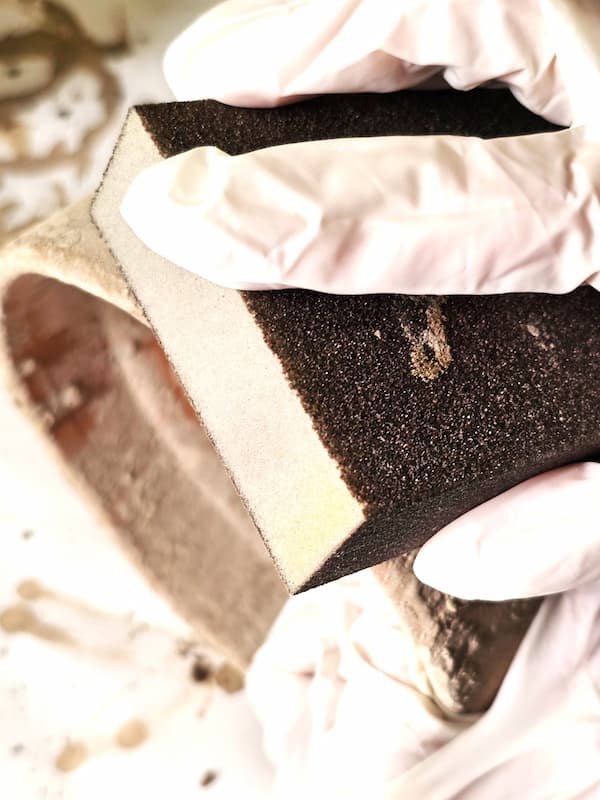
Next, use a 120-grit sanding sponge or 120-grit sand paper. Lightly sand small sections of lime from the pots. This helps create different variations in the aged look and keeps it natural. Sand small pieces so the orange color ot the pots shows. Do this until you achieve your desired look.
Step 4: Adding Moss Growth Look
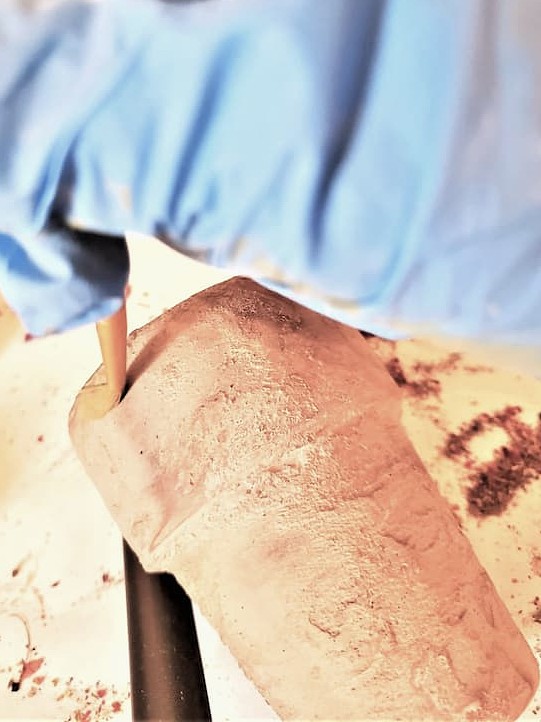
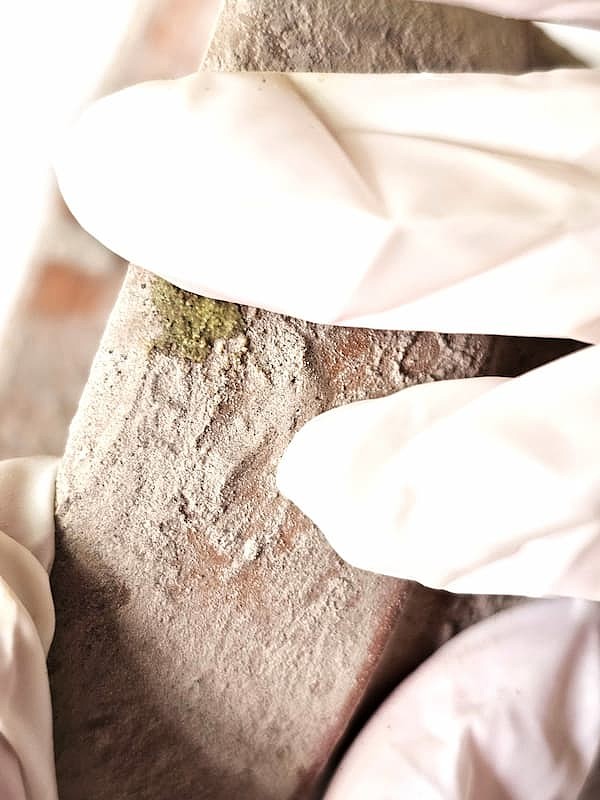
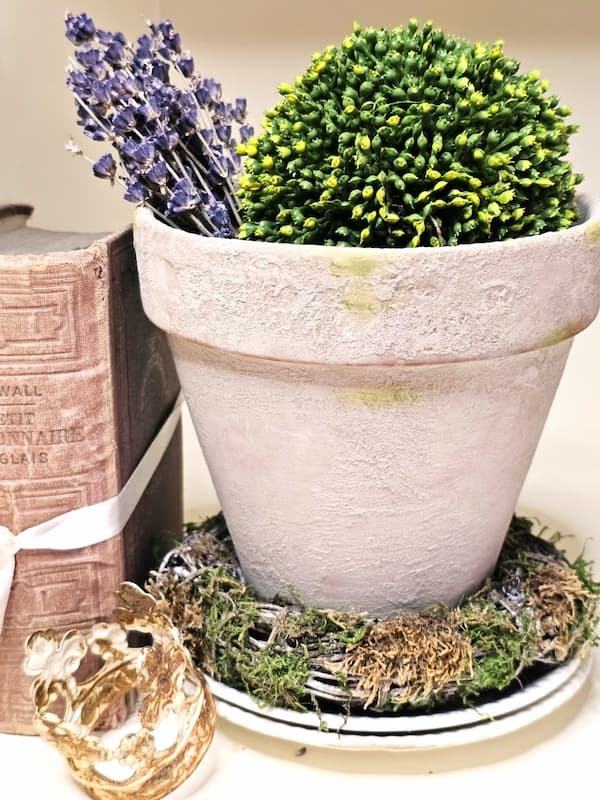
Add a little water to the green paint and mix. After adding a bit of green paint to the rim with a small paint brush, lightly smooth it to blend. This adds the look of moss growth. The part I really enjoy about garden-lime-aged pots is leaving variations of the lime. This is a creative way to give new terra cotta pots different looks with chalky lime.
Cindy’s Note: As I began adding avocado to different areas of the small pots, creating my own moss gave these the most natural-looking patinas.
Step 5: DIY Chalky Lime Pots with Rub on Transfers
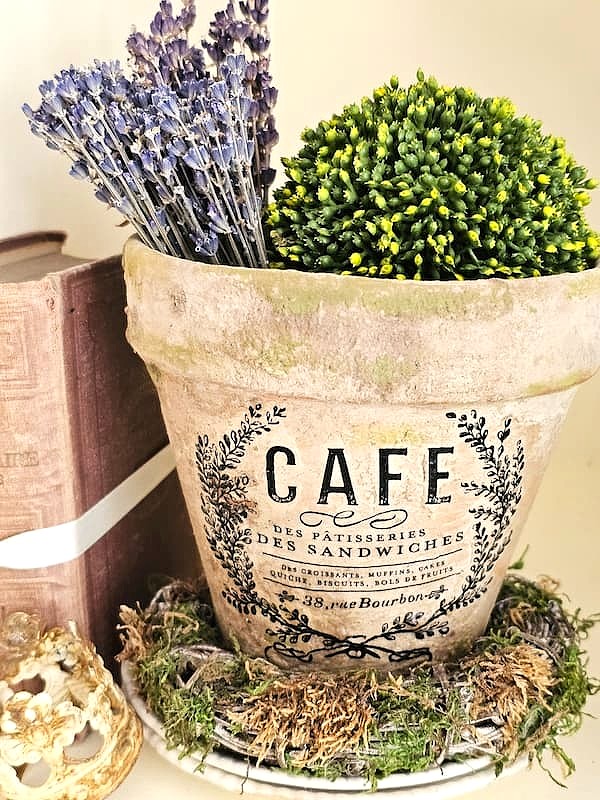
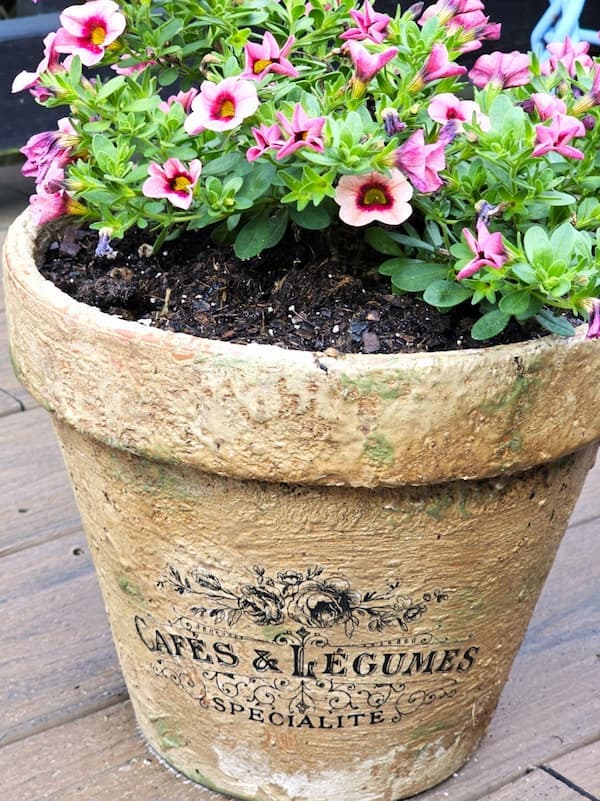
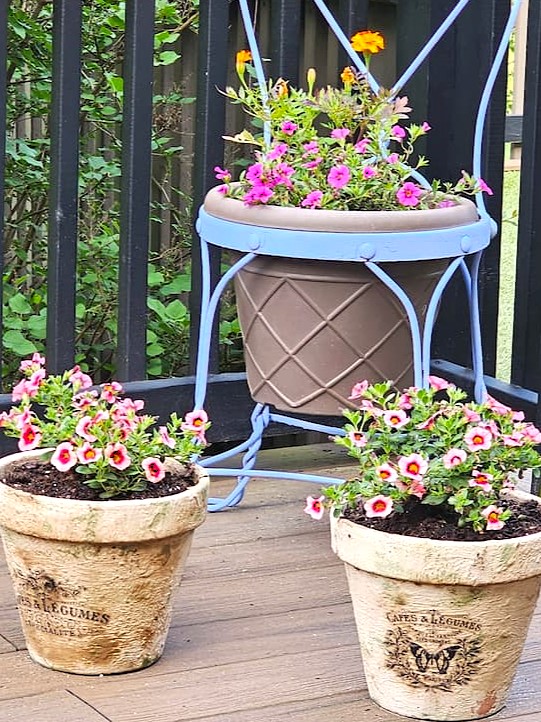
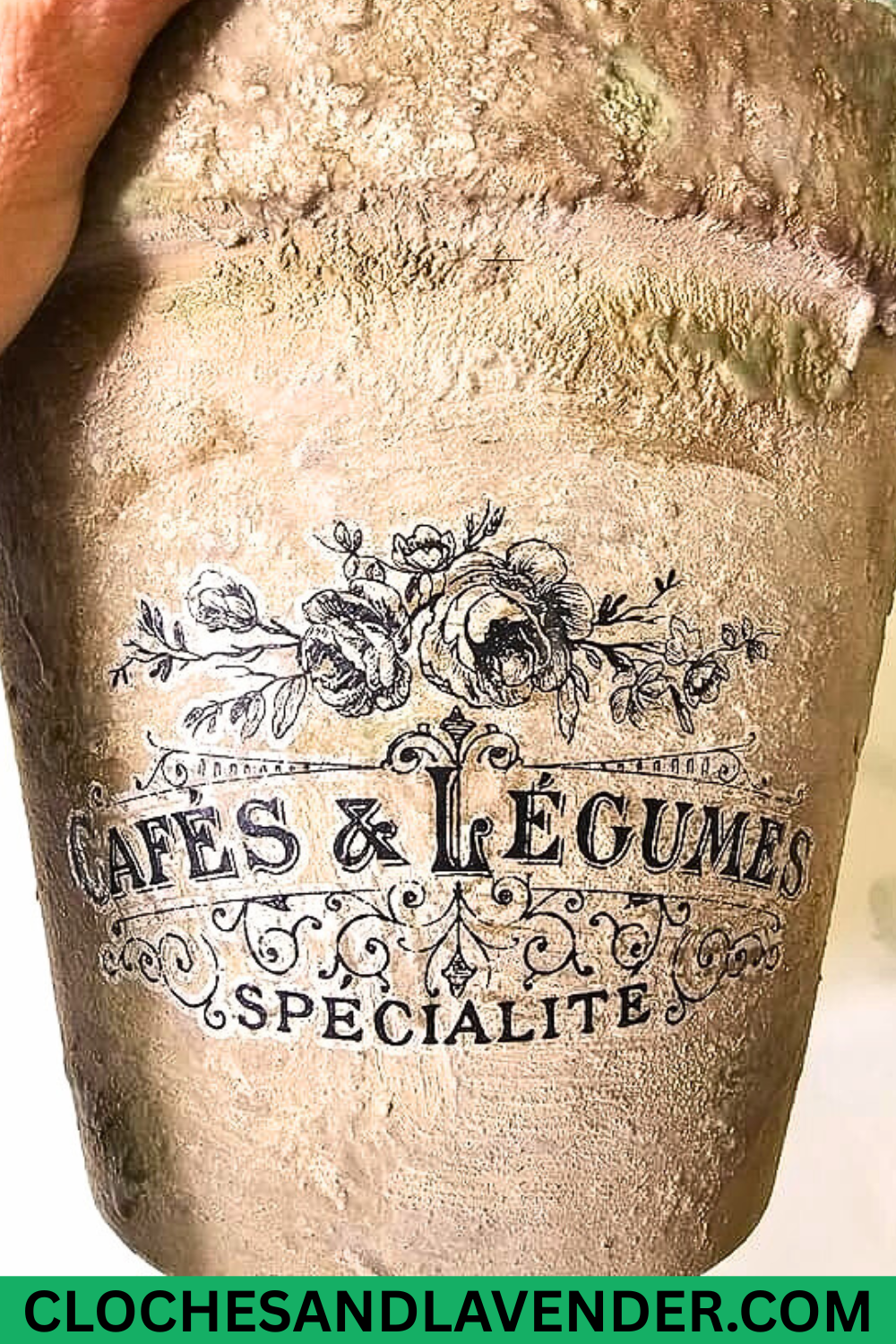
I added this chalky lime technique to some larger pots Ipicked up from Home Depot. One bigger pot is on our deck, and the other is on our front porch. Since each pot will have a real plant and soil, it’s a good idea to add a clear coat of outdoor sealer to the outside and the inside of the pot before adding the lime.
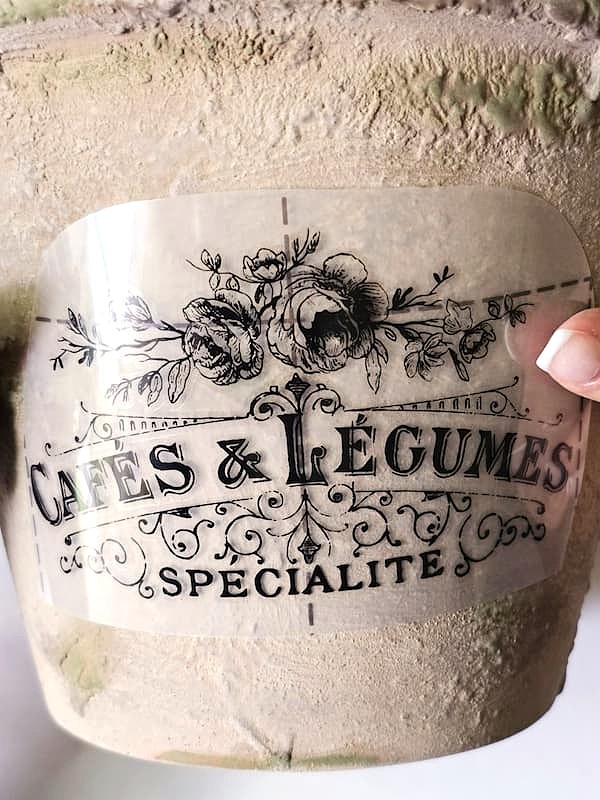
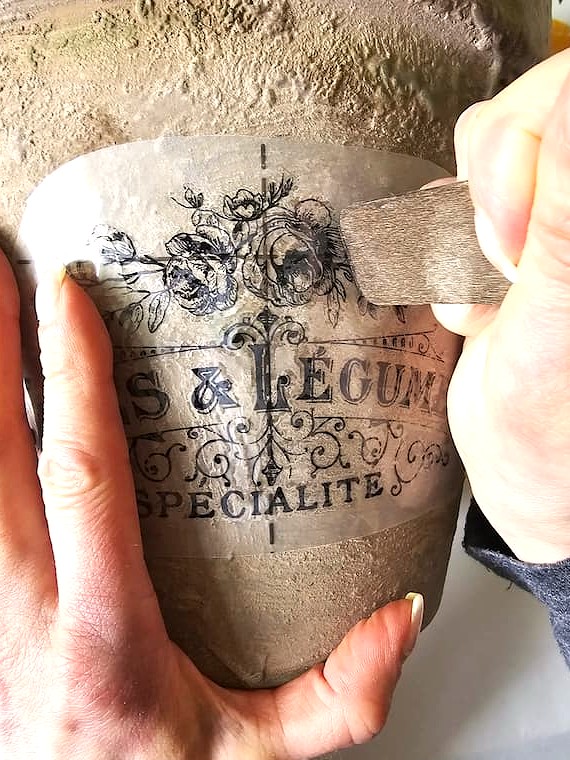
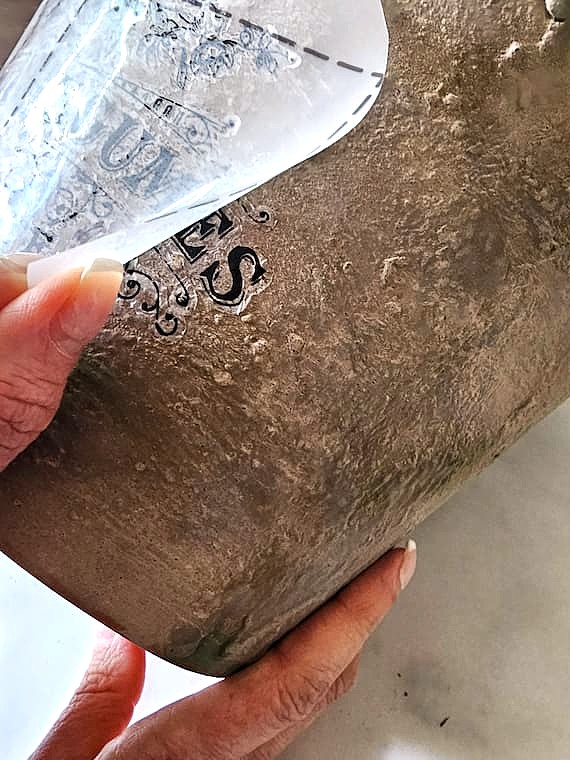
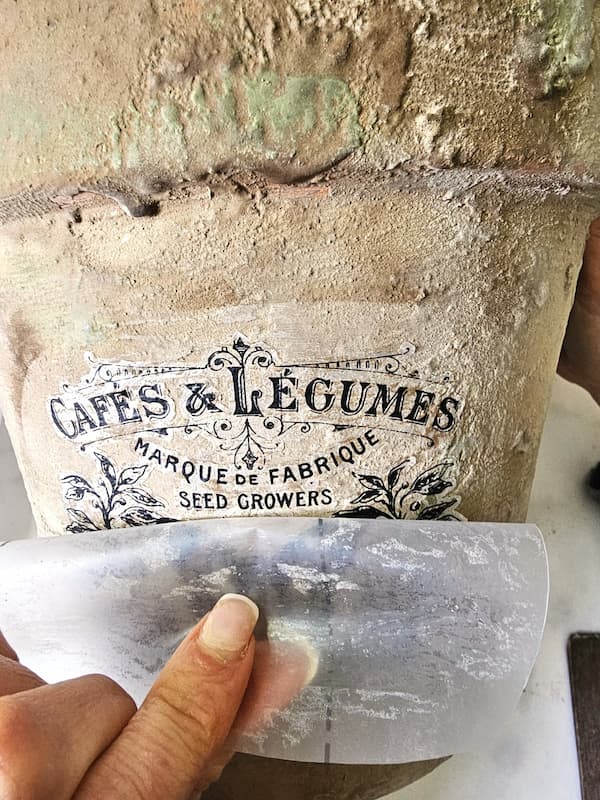
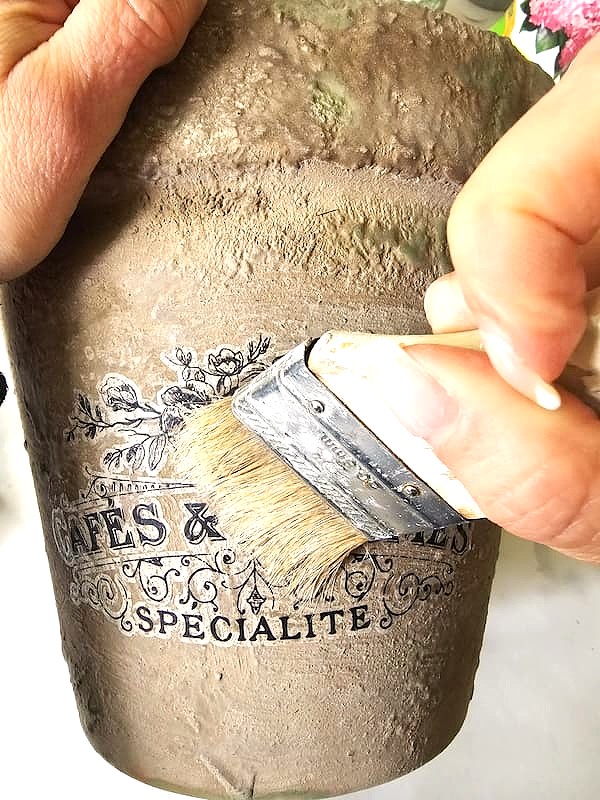
When adding lime to pots that will have a transfer added, leave the lime smoother. If the lime is too bumpy, the transfer may not stick well. After adding the transfer, I used a clean brush to smooth the transfer. I brushed away from the edges. This is an easy way to ensure no pieces of the transfer come off the pot.
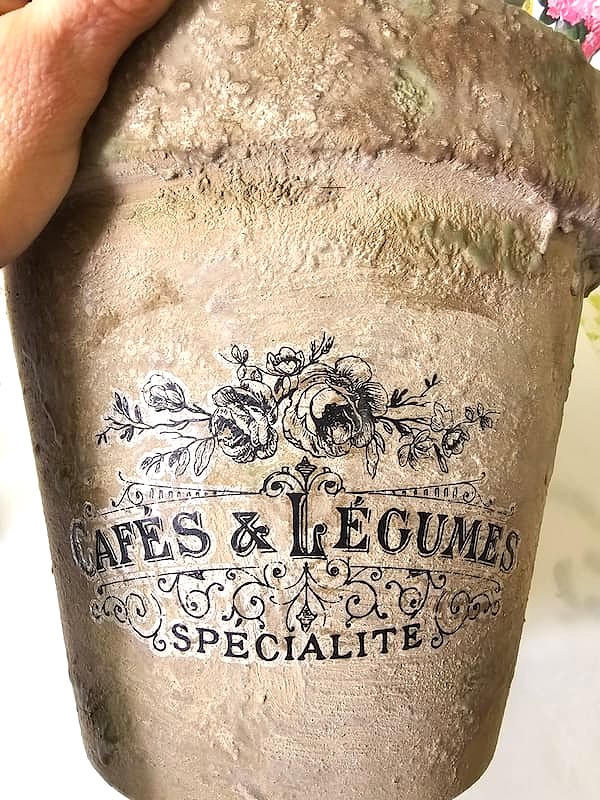
Then I did steps one through three until I got the look I wanted with the lime. I also added a rub on transfers for a little bit of charm. After adding the rub on transfers, I finished with three coats of outdoor protective sealer. This clear coat outdoor sealer has UV protection and is water-safe. So far, they have held up great; however, the one on our porch held up a bit better. We have high humidity, rain, and hot sun in NJ.
Cindy’s Note: Rub on transfers are a creative way to update any easy project in a matter of minutes. The transfers I used are no longer available. I found these that are similar.
Other Easy Ways to Age New Terra Cotta Pots
While garden lime is my go-to for aging terra cotta pots, here are a few other easy techniques you may want to try, depending on the look you’re after.
Supplies List Fertilizer Method:
- Water soluble fertilizer – HERE
- Wine cork
- Candle
- Water
The primary ingredient for this method is a concentrated fertilizer. The first thing to do is place a standard-size wine cork into the drainage hole on the inside of the pot. For small pots, it’s a good idea to remove small pieces of the cork to get the correct fit. For larger pots, add extra cork pieces if needed.
Next, light a candle and drip the wax onto the outside of the pot. This seals the bottom of the terra cotta pots. Let the water cool completely. Mix the fertilizer using five times more than the package directions, stirring until fully dissolved. Set aside and add water as needed until the chalky finish appears. The longer the pots sit, the more dramatic the results. Remove the wine cork, wax, and water from your finished product.
For more details, visit Martha Stewart, who shares additional easy techniques for aging pots. HERE.
Supplies List: Create Salt Water Aged Terracotta Pots
- New terracotta pots – Dollar Tree or garden center
- Large bucket – HERE
- Table Salt – Iodized
- Warm Water
- Sand paper
- Paint stirrer
- Cloth
Salt Water Method:
This is an easy way to create aged terra cotta pots. The first thing to do is to fill a large bucket with warm water, large enough to hold your new pot. Add the table salt (the primary ingredient) and stir until no small pieces remain. It’s a good idea to use a long paint stirrer for even mixing.
Place the new terracotta pots into the large bucket and soak for several hours. Remove from the salt water and allow the pots to dry completely. Once dry, the surface of the pot should appear white. This is a personal preference. Use sand paper to distress the surface of the pot for an authentic aged appearance. Style them in your home or on the front porch.
Visit The Art of Doing Stuff for step-by-step instructions. (HERE). Karen shares great details for this process.
Cindy’s Tip: Turn the pots so both the inside and outside of the pot are evenly immersed. After a little research, I learned this salt water technique isn’t safe for real plants, so faux plants are recommended.
Supplies List: Aged Pots with Plain Yogurt
- Sponge brush or a cheap brush (chip brush) (HERE)
- Plain Yogurt
- Plastic bag (optional)
Yogurt Method:
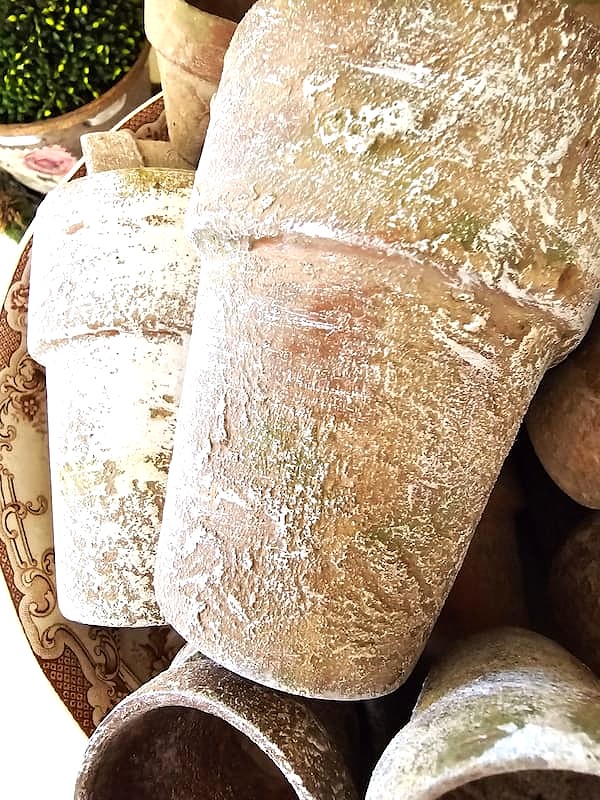
For the most natural-looking patinas, use a sponge brush or a cheap paint brush to coat the outside of the pot with plain yogurt. A foasm brush avoids brush strokes. Place the pot in a shady place for about a month until you have reached your desired look. As an option, cover the pot with a plastic bag to keep it moist.
This next step is a personal preference; coat the inside of the pot with the yogurt for a finished appearance. Yogurt applied to dry pots can create dramatic results when left in a shaded place. Place these under a deck, a shaded front porch, or in a wooded area. For a subtler look, soak the terra-cotta pots in water for 15 minutes before applying the yogurt. Martha Stewart shares the step-by-step instructions (HERE).
Cindy’s Note: After a little research, I learned you can add moss growth to yogurt for a more aged look. (HERE IS A VIDEO FROM Garden & Lawn) I tried this on smaller pots years ago, but it was a failure, so if you try it and succeed, please send me a picture!
Staging Aged Terracotta Pots
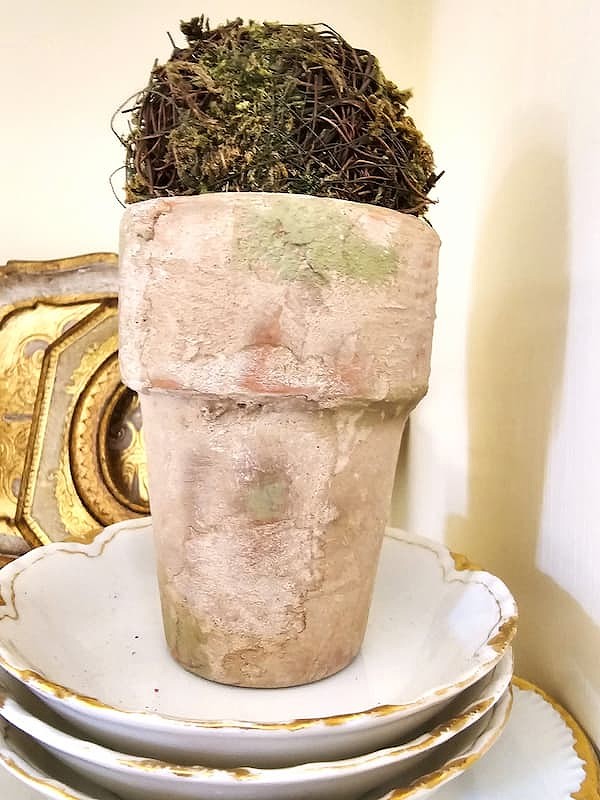
Arranging aged terra cotta pots in our living space is an easy and creative way to add charm to our home all year. Finding naturally aged terra-cotta pots has become increasingly difficult, especially in NJ. So, when I discovered this easy project idea, I knew I had to share it with you.
I’ve styled these in our home in several different ways, and they’ve become favorites for adding charm to DIY projects and everyday decorating. You may have noticed the soft, aged look, especially the moss detail I created using paint. It’s easy, fast, and adds so much character to every pot.
If I can do this, you absolutely can too. I have MS, and my motor skills aren’t always top-notch. It’s funny, I may need a walker, but hand me a glue gun and a paintbrush, and I can work magic! Read my 36-year MS journey full of strength, love, and perseverance (HERE).
Aging Clay Pots with Different Looks
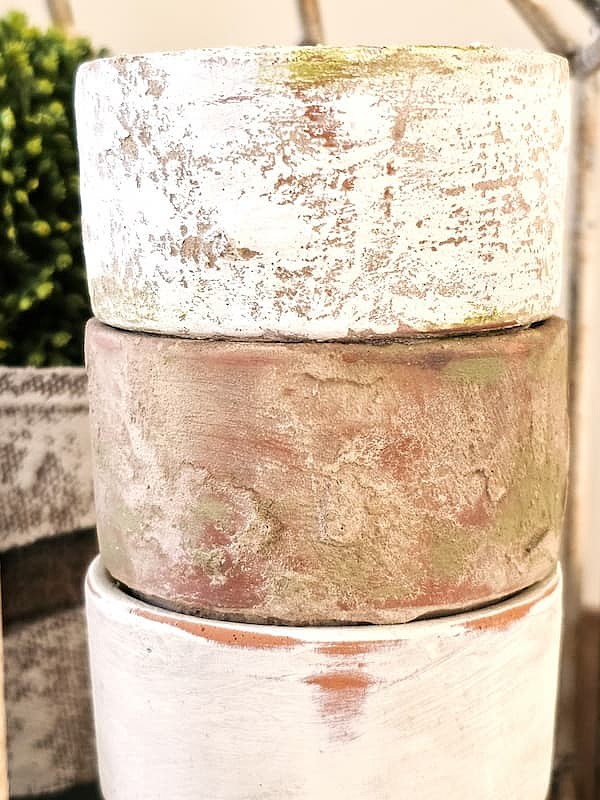
I’ve seen paint added to flower pots using black paint under white acrylic paint. Apply the black paint first and let it dry, then randomly add the white acrylic paint. There’s no need to worry about brush strokes. These are all beautiful and easy techniques. However, I find garden-lime-aged pots to be the easiest way to achieve dramatic results in a new pot. My personal preference when aging furniture, decor elementd, or terracotta-pots is mixing different colors.
Cindy’s Note: I added white paint to my lime-covered terra-cotta pots using a heavy dry brush technique, and it took only a few minutes. You can learn all the details in my blog post on dry brushing planters and give 20-year-old planters new life. Age a picnic basket with the same technique and age the leather too. I share step-by-step tutorials, and dry brushing is easy, uses only a cheap brush, a little paint, and gives instant gratification. I also share how to mix different colors. These ideas may inspire you to decorate with smaller pots throughout your home for spring through summer.
Using chalky lime, you can effortlessly age pots of any size. These charming pots can be enjoyed (HERE) year-round, and I share creative ideas in this blog post to add them to your home decor in this home tour.
Create Topiaries with Moss Paint and Faux Dirt
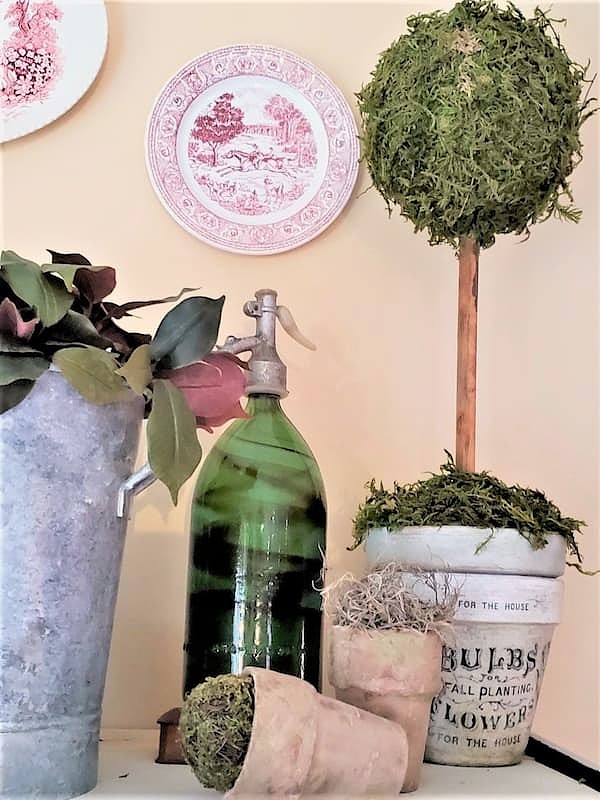
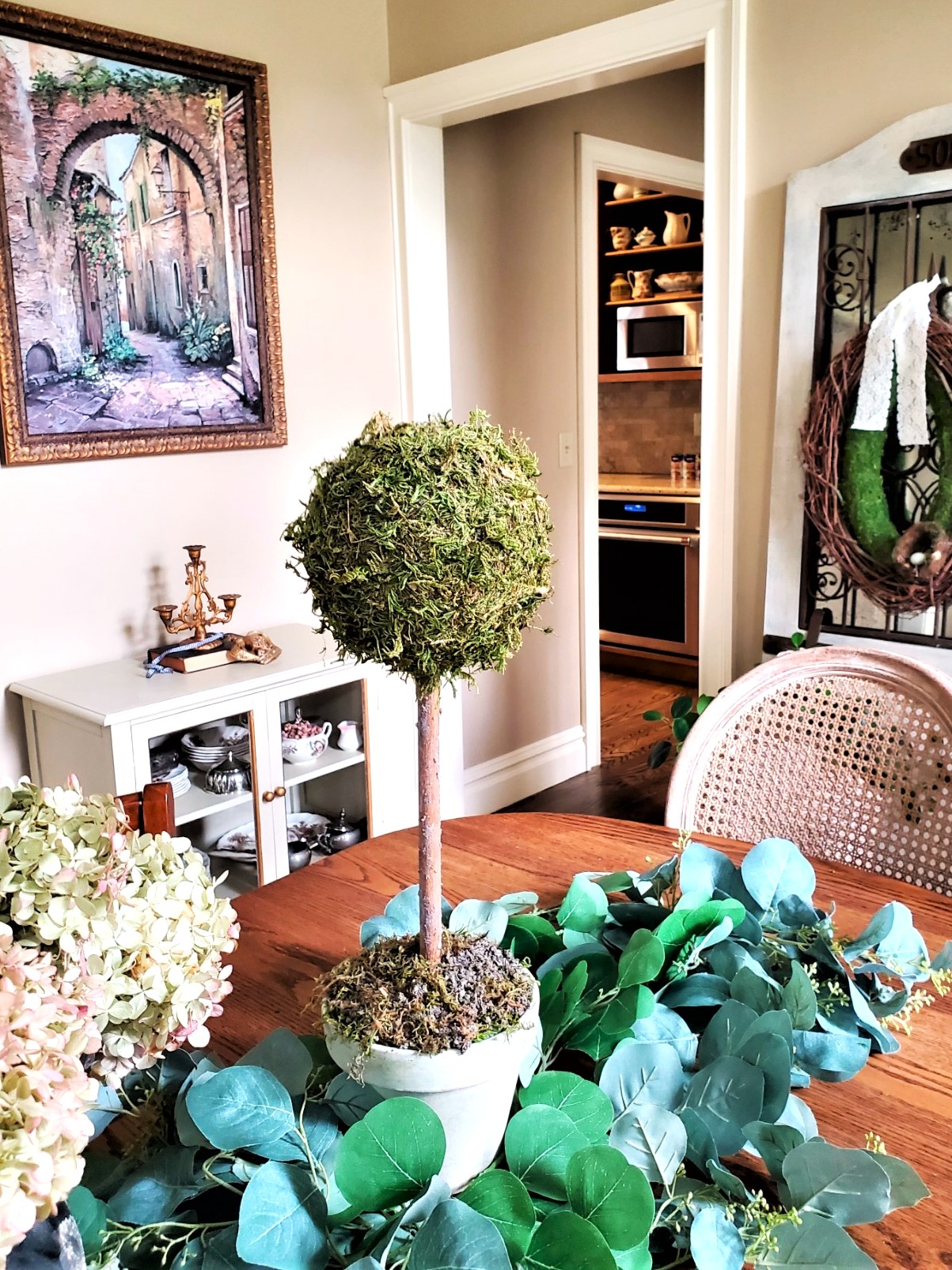
Have you ever considered making a topiary? (HERE) I shared a painting technique using white gesso and explained how I create moss paint by mixing raw umber paint with green paint. This technique gives the appearance of natural moss. I also share the easiest way to make fake dirt that looks like the real thing. It comes together in minutes and makes artificial plants look realistic. I promise the end result will amaze you. (HERE).
Why Lime is My Go-To for Aging Clay Pots
Lime is a champion in the aging process. It offers a simple way to achieve a weathered, aged look. It makes it easy to replicate the appearance of naturally aged pots in minutes. This method works on both small and large pots and remains my favorite technique for achieving natural-looking results.
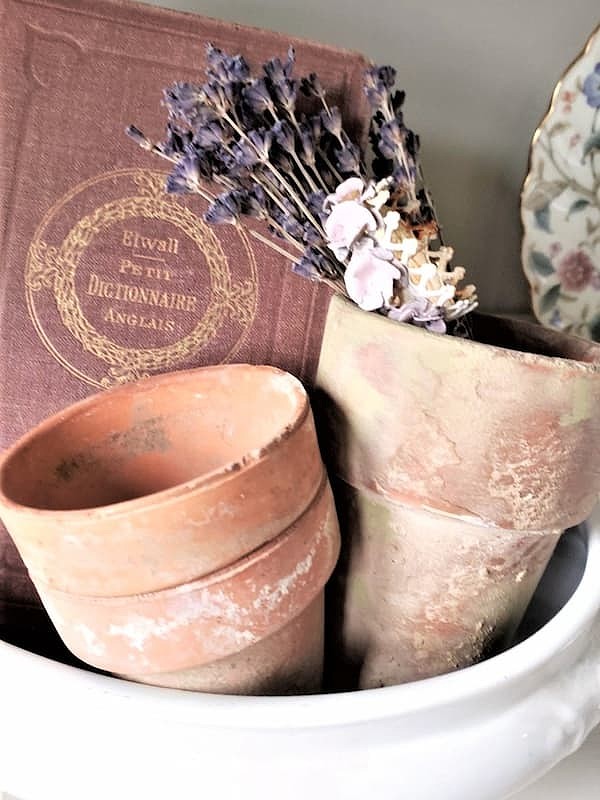
What is the primary ingredient for a subtler look and most natural-looking patinas?
A cup of garden lime, not much water. This gives the orange color of a new pot a subtler look. It’s the easiest way to create aged terra cotta pots. This aging process looks like the pots have been sitting out for ages, and it takes a matter of minutes!
Adding Terracotta Pots to Home Decorating
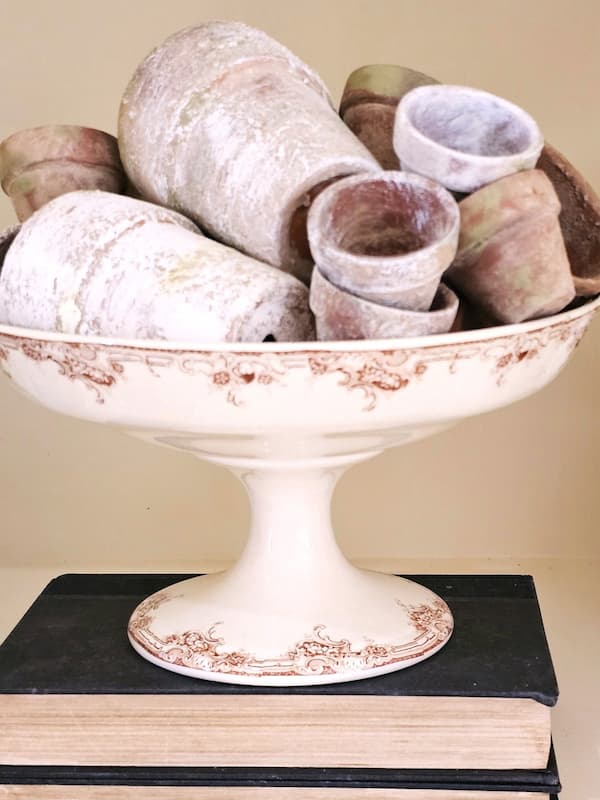
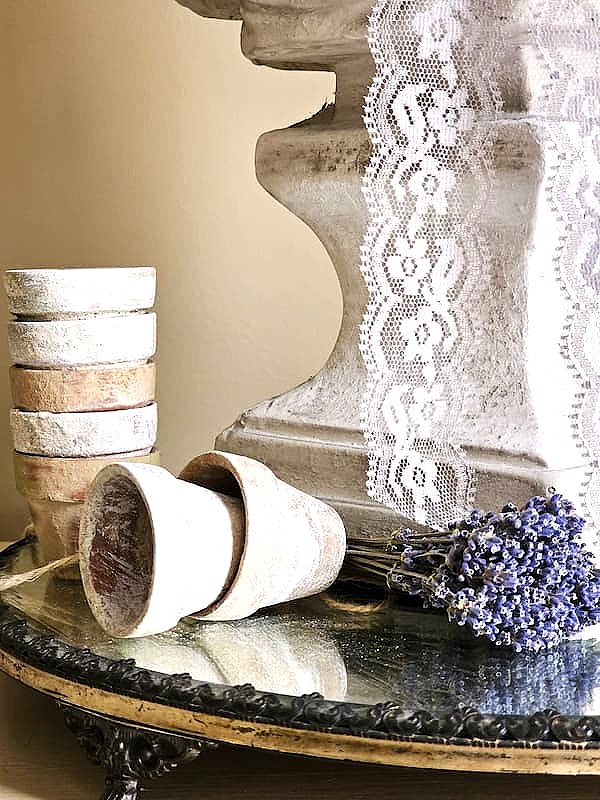
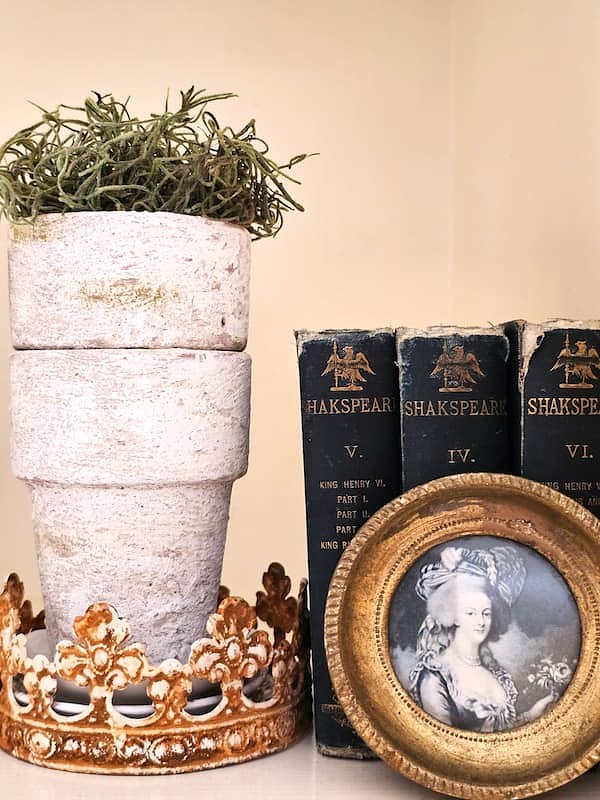
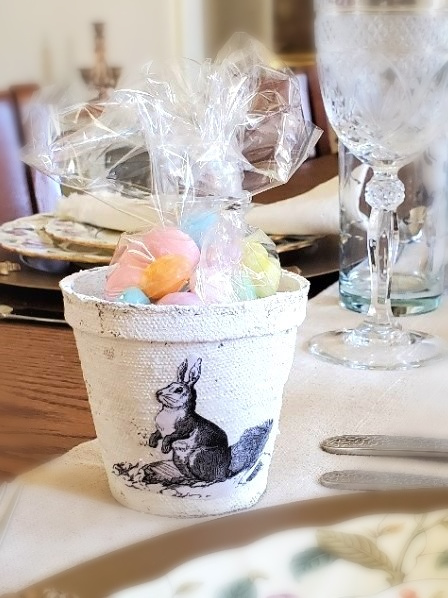
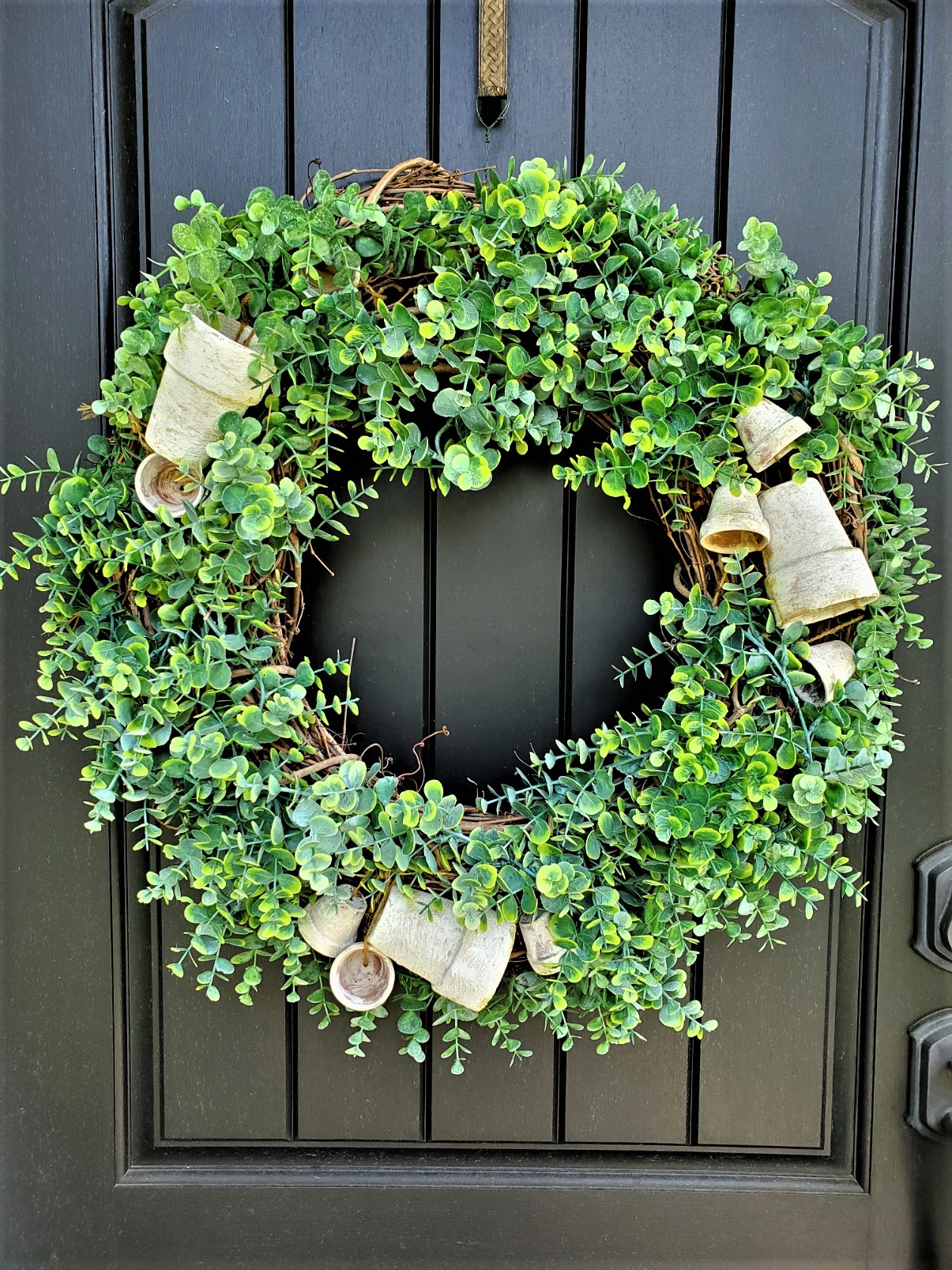
Incorporating these garden-lime-aged pots into your home or covered front porch is an easy and creative way to decorate all year long. Try placing them in an urn, compote dish, decorative bowl, or small basket. These aged terracotta pots add rustic charm to any home design style.
So, grab your pots and supplies, and easily age terracotta pots using lime for a vintage look, and give this idea a try for your home.

DIY Projects of Interest

Easily Age Terracotta Pots Using Lime
Notes
Easily Age Terracotta Pots Using Lime
Supplies List:
- Cup of garden lime – garden center, Home Depot, Amazon, or Walmart
- New terra cotta pots – Home Depot, garden center, or Dollar Tree
- Cheap brush, sea sponge, or sponge brush – Home Depot, Dollar Tree, or craft store (HERE)
- Plastic container
- 120-grit sanding sponge or sandpaper
- Little water
- Avocado or moss craft paint or moss growth
- Matte Sealer
 Join me as we try the fun and easy process of using lime to give clay pots an aged appearance.
Step 1: Age Pots: Easy Lime Technique
The first thing I did was cover your work surface with craft paper to begin the aging process. If it’s a nice day, you can even make your garden-lime-aged pots outdoors. The next step is to add chalky lime to a plastic bowl and add a little water. The mixture should have the consistency of pudding, which helps createthe look of naturally aged terra cotta pots. I used a cup of garden lime and added a little water at a time until I reached the right consistency for my flower pots. Normally, the measurement is 2 cups of water to 1 cup of garden lime. For the lime technique, I’m working on four small pots and a few even smaller pots to create aged terracotta pots with a natural look. Cindy’s Tip: I have the butcher paper roller attached to my craft tables and swear by it. This paper works with it, and the best part is that it’s waterproof!
Step 2: Simple Steps to Apply Your Aged Pot Finish
Begin applying the lime wash to the outside of the pot using a paintbrush. To age new terracotta pots with lime, brush the mixture of garden lime over the outside of the flower pots. Once the outside dries, add the lime wash to the inside of the pot as well. Let the pots dry. The pots will dry in a matter of minutes, and lime will form a white, soft film on the surface of the pot. This is what gives terra cotta pots a beautiful aged look and instant gratification, no waiting for pots to age naturally. Cindy’s Tip: Lime can be caustic, so it’s important to wear gloves when working with it. I also like leaving spots heavier with the lime. When pots age naturally outdoors, they develop uneven areas. This helps the aged terracotta pots look more authentic.
Step 3: Clay Pots Add a Clear Coat and Sand
After the flower pots dry, spray them with a light coat of matte sealer. Being an organic product, lime may come off the pots; this is normal. Again, let the terra cotta pots dry completely. Next, use a 120-grit sanding sponge or 120-grit sandpaper. Lightly sand small sections of lime from the pots. This helps create different variations in the aged look and keeps it natural. Sand small pieces so the orange color ot the pots shows. Do this until you achieve your desired look.
Step 4: Adding Moss
Add a little water to the green paint and mix. After adding a bit of green paint to the rim with a small paintbrush, lightly smooth it to blend. This adds the look of moss growth. The part I really enjoy about garden-lime-aged pots is leaving variations of the lime. This is a creative way to give new terra cotta pots different looks with chalky lime. Cindy’s Note: As I began adding avocado to different areas of the small pots, creating my own moss gave these the most natural-looking patinas.
Step 5: DIY Lime Pots with Rub-on Transfers
I added this chalky lime technique to some larger pots Ipicked up from Home Depot. One bigger pot is on our deck, and the other is on our front porch. Since each pot will have a real plant and soil, it’s a good idea to add a clear coat of outdoor sealer to the outside and the inside of the pot before adding the lime. When adding lime to pots that will have a transfer added, leave the lime smoother. If the lime is too bumpy, the transfer may not stick well. After adding the transfer, I used a clean brush to smooth the transfer. I brushed away from the edges. This is an easy way to ensure no pieces of the transfer come off the pot. Then I did steps one through three until I got the look I wanted with the lime. I also added a rub-on transfer for a little bit of charm. After adding the rub on transfers, I finished with three coats of outdoor protective sealer. This clear coat outdoor sealer has UV protection and is water-safe. So far, they have held up great; however, the one on our porch held up a bit better. We have high humidity, rain, and hot sun in NJ. Cindy’s Note: Rub-on transfers are a creative way to update any easy project in a matter of minutes. The transfers I used are no longer available. I found these that are similar.

Cindy I love your Terra Cotta pots. Love the aging and French look you give them. Have a great start to the new week. This weather we are all having is crazy. Tonight tornado watch and warm weather with hail storms coming. Tomorrow a drop to freezing temps and snow. Nuts!!! Hugs. Kris
Thank you Kris. I’m happy with how they turned out. Nutty weather here too. Rain tomorrow. 66 then it drops to 30. I can’t stand it. Happy need week to you.